
GSM Loggers
REGMIK GSM loggers are designed for collection, archiving, and remote transmission of technological data via the GSM network. The devices allow monitoring of equipment parameters, receiving emergency alerts, and remote monitoring of objects without constant personnel presence.
Assortment
Products
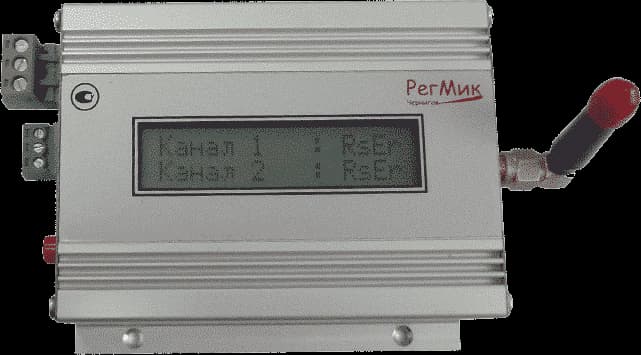
GSM Loggers
GSM loggers are designed for continuous monitoring, recording, and remote transmission of data from industrial equipment, engineering systems, and technological objects. The devices receive information from sensors, controllers, meters, and other automation devices, store it in internal memory, and transmit it via the mobile network to a computer, server, or dispatch center.
GSM loggers enable remote control of objects located at significant distances from the operator without the need to lay cable networks or connect to local communication infrastructure.
What GSM Loggers Are Used For
The primary task of a GSM logger is remote monitoring of technological parameters and prompt notification of personnel about equipment operation changes.
Main tasks include:
- remote temperature control;
- humidity monitoring;
- liquid level control;
- pressure monitoring;
- pump operation control;
- archiving of technological parameters;
- transmission of emergency messages;
- remote data collection;
- object dispatching;
- real-time equipment status control.
Operating Principle
The GSM logger receives data from connected sensors or automation devices, records data to non-volatile memory, and transmits it via the GSM network. Transmission can be done via SMS, GPRS, or other mobile communication channels depending on system configuration.
In case of an emergency, the device can automatically send messages to responsible personnel, allowing quick response to deviations from normal operation.
Main Features of GSM Loggers
Modern GSM loggers provide a wide range of functions for industrial monitoring:
- registration of measured parameters;
- data archive storage;
- information transmission via GSM;
- sending emergency messages;
- remote access to parameters;
- operation with multiple measurement channels;
- control of discrete inputs;
- event log generation;
- integration with dispatch systems;
- remote equipment diagnostics.
The REGMIK product line includes measuring devices and emergency signal indicators with GSM logger function, combining control, indication, and data transmission features.
Applications of GSM Loggers
GSM loggers are used at sites where it is necessary to receive information without constant operator presence.
Main application areas:
- pump stations;
- boiler houses;
- heat points;
- water supply systems;
- sewerage systems;
- tanks and storage reservoirs;
- wells;
- greenhouses;
- refrigeration units;
- warehouses;
- manufacturing enterprises;
- energy facilities;
- remote technological installations;
- dispatching and monitoring systems.
GSM loggers are especially effective for objects lacking constant Ethernet or internet access.
Supported Signal Types
Depending on the model, GSM loggers can work with various types of signals:
- temperature sensors;
- humidity sensors;
- level sensors;
- pressure sensors;
- 4–20 mA signals;
- 0–10 V signals;
- discrete inputs;
- pulse signals;
- devices with RS485 Modbus interface.
This allows GSM loggers to be used as versatile tools for data collection and transmission in automation systems.
How to Choose a GSM Logger
When selecting a GSM logger, consider:
- number of monitored channels;
- type of connected sensors;
- data archive volume;
- method of data transmission;
- need for SMS notifications;
- support for GSM/GPRS;
- availability of RS485 Modbus interface;
- dispatching requirements;
- operating conditions;
- mounting type;
- need for autonomous operation.
For simple monitoring, GSM loggers with emergency notification function are suitable, while complex objects may benefit from solutions with data archiving and integration into dispatch control systems.
Advantages of Using GSM Loggers
Using GSM loggers significantly simplifies remote object monitoring and improves the speed of response to emergency situations.
Key advantages:
- remote object monitoring;
- prompt receipt of emergency messages;
- data archiving;
- reduced maintenance costs;
- real-time equipment operation control;
- capability to operate at remote sites;
- integration into automation systems;
- increased operational reliability;
- reduced risk of accidents and downtime.
Buy REGMIK GSM Loggers
Our catalog features REGMIK GSM loggers for remote monitoring, archiving, and transmission of technological data. The devices can be used to monitor temperature, humidity, level, pressure, and other parameters in automation systems, energy, water supply, and industrial processes.
Our specialists will help you select a GSM logger according to the number of channels, signal types, data transmission method, and your object's requirements.