
Electromagnetic Flowmeters
Electromagnetic flowmeters are used for precise measurement of electrically conductive liquid flow in pipelines, pump stations, water supply systems, treatment facilities, and industrial processes. The catalog includes flanged, wafer, sanitary, compact, and remote models with various output signals and connection types.
Assortment
Products
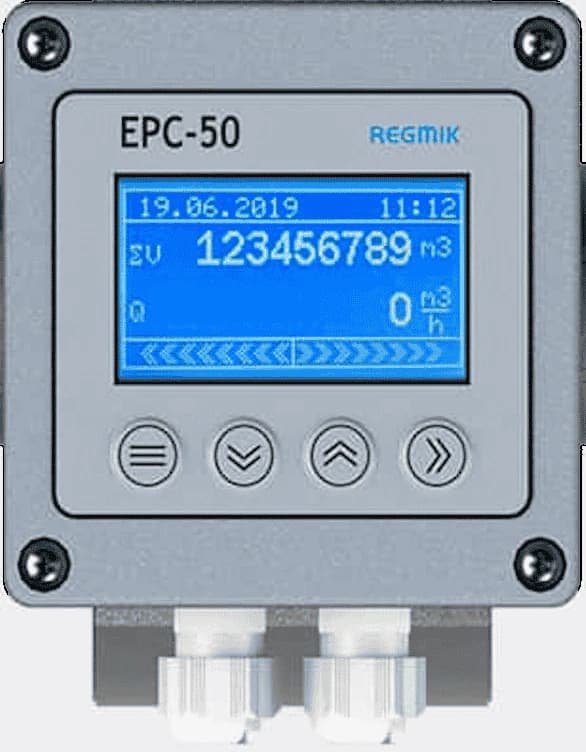


Electromagnetic Flowmeters
Electromagnetic flowmeters are designed for the precise measurement of the flow rate of electrically conductive liquids in pipelines, technological lines, water supply systems, wastewater disposal, dosing, and industrial automation. They allow controlling the volumetric flow of the medium, transmitting data to a controller, meter, dispatching system, or other control equipment.
Such devices are widely used where stable flow measurement without moving mechanical parts is required. An electromagnetic flowmeter is well suited for water, wastewater, technical liquids, solutions, suspensions, food products, chemical media, and other liquids with sufficient electrical conductivity.
Principle of Operation of Electromagnetic Flowmeter
The operation of an electromagnetic flowmeter is based on the law of electromagnetic induction. When an electrically conductive liquid passes through a magnetic field inside the measuring pipe, an electric signal appears on the electrodes. Its magnitude depends on the flow velocity.
The electronic unit processes this signal and converts it into a flow value. The data can be displayed on the device screen or transmitted to an automation system through analog, pulse, or digital output.
An important feature of electromagnetic flowmeters is the absence of moving parts in the measuring section. This reduces wear, simplifies maintenance, and allows operation with liquids containing impurities or solid particles.
Where Electromagnetic Flowmeters Are Used
Electromagnetic flowmeters are used in various industrial and engineering systems:
- water supply and wastewater disposal;
- treatment facilities;
- pump stations;
- liquid dosing systems;
- food industry;
- chemical production;
- pharmaceutical processes;
- thermal energy sector;
- pulp and paper industry;
- mining and processing enterprises;
- technical water accounting systems;
- technological pipelines;
- production lines;
- automatic flow control systems.
In water supply systems, such devices are used for water accounting and monitoring pump equipment operation. In industry, they help maintain specified flow rates, control reagent feed, solutions, or technological liquids supply.
Liquids That Can Be Measured
An electromagnetic flowmeter is suitable for liquids that conduct electric current. Such media include:
- drinking water;
- technical water;
- wastewater;
- cooling liquids;
- salt, acid, and alkali solutions;
- chemical reagents;
- food liquids;
- milk, juices, syrups;
- suspensions and pulps;
- technological liquids with impurities.
Electromagnetic flowmeters are not used for gases, steam, compressed air, petroleum products, and liquids with very low electrical conductivity. For such media, other types of flowmeters are better suited.
Main Types of Electromagnetic Flowmeters
Depending on design and installation method, electromagnetic flowmeters can have various configurations.
Flanged Electromagnetic Flowmeters
Mounted between pipeline flanges and used in industrial systems, utilities, water channels, pump stations, and technological lines. This is one of the most common options for stationary flow measurement.
Wafer Flowmeters
Have a more compact construction and are installed between flanges without their own flange connections. Suitable for systems with limited installation space.
Sanitary Electromagnetic Flowmeters
Used in food, pharmaceutical, and biotechnology industries. Have hygienic connections, materials suitable for product contact, and construction convenient for cleaning.
Compact Flowmeters
In these models, the measuring section and electronic converter are placed in one housing. This is a convenient solution for standard installation conditions.
Remote Design
The flow sensor and electronic unit are installed separately. This option is used in difficult conditions: at high medium temperatures, vibrations, flooding, limited access, or the need to place the display in a convenient location.
Insertion Electromagnetic Flowmeters
Installed through a special nozzle or tapping into the pipeline. Can be used on large diameter pipes where a full bore flowmeter is too expensive or difficult to mount.
Output Signals and Connections
Electromagnetic flowmeters can transmit data in various formats depending on the model and automation system requirements.
Common output signal options include:
- 4–20 mA;
- pulse output;
- frequency output;
- relay output;
- RS485 Modbus;
- HART;
- Profibus;
- Ethernet or other digital interfaces depending on configuration.
For simple flow control, an analog 4–20 mA signal is often used. For volumetric accounting, a pulse output is convenient. Models with digital protocols are suitable for integration into modern dispatching and SCADA systems.
How to Choose an Electromagnetic Flowmeter
When choosing an electromagnetic flowmeter, consider not only the pipeline diameter but also the properties of the medium, installation conditions, and signal requirements.
Main selection parameters:
- type of liquid and its electrical conductivity;
- minimum, nominal, and maximum flow rates;
- pipeline diameter;
- operating pressure;
- medium temperature;
- lining material of the measuring pipe;
- electrode material;
- connection type: flanged, wafer, sanitary, threaded, or insertion;
- required measurement accuracy;
- output signal type;
- presence of a display;
- compact or remote design;
- enclosure protection level;
- installation conditions: vibrations, moisture, flooding, aggressive environment;
- compatibility with controller, meter, or SCADA system.
For water and wastewater, flanged electromagnetic flowmeters are usually used with reliable lining and durable electrodes. Sanitary models are required for food liquids. For aggressive chemical environments, it is important to correctly select electrode materials and internal coating.
Advantages of Electromagnetic Flowmeters
Electromagnetic flowmeters have a range of advantages for industrial and commercial applications:
- high measurement accuracy;
- no moving parts;
- minimal maintenance;
- ability to operate with contaminated liquids;
- low pressure loss;
- stable operation with changes in liquid density or viscosity;
- wide diameter range;
- convenient integration into automation systems;
- ability to measure both instantaneous flow and total volume;
- long service life with proper material selection.
Thanks to these features, electromagnetic flowmeters are often chosen for water utilities, industrial enterprises, pump stations, and technological processes where reliable liquid flow control is required.
Installation Recommendations
For proper operation of the electromagnetic flowmeter, it is important to follow installation rules. The measuring pipe must be completely filled with liquid, and the device should be installed considering the flow direction.
It is also necessary to provide straight sections of pipeline before and after the flowmeter to reduce vortex effects. For stable measurement, avoid mounting near pumps, valves, sharp contractions, or bends without the required distance. In systems with electromagnetic interference, pay attention to proper grounding and cable shielding.
Buy Electromagnetic Flowmeters
Our catalog features electromagnetic flowmeters for water, wastewater, technical liquids, chemical solutions, food products, and industrial processes. Models with various diameters, connection types, electrode materials, output signals, and design options are available.
We will help select an electromagnetic flowmeter according to pipeline parameters, medium type, flow range, temperature, pressure, and your automation system requirements.