
Power Controllers
Power controllers are used to control electrical loads in heating, drying, ventilation, and industrial automation systems. They allow smooth or stepwise adjustment of power supplied to TENs, heaters, furnaces, drying chambers, and other equipment.
Assortment
Products
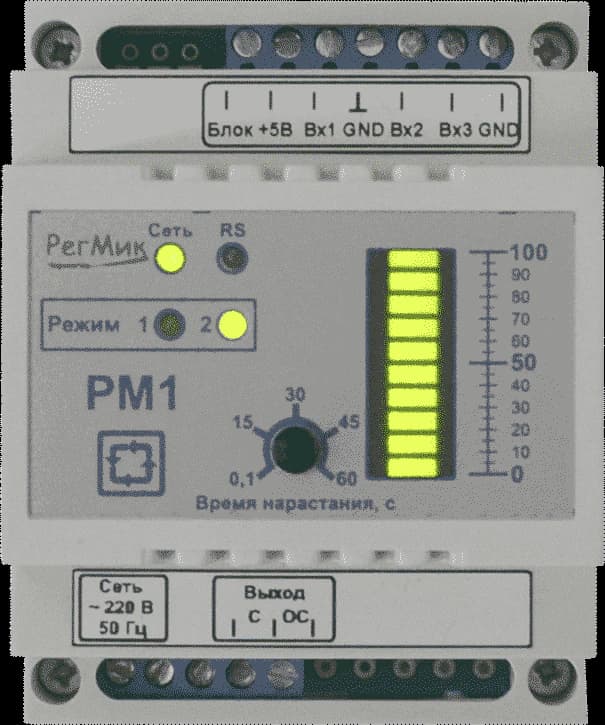
Power Controllers
Power controllers are designed to manage electrical loads in industrial automation systems, heating, ventilation, drying, thermal processing, and technological equipment. They allow adjusting the power supplied to the actuator and maintaining a stable operating mode according to the signal from a regulator, controller, or other control system.
Power controllers are most commonly used to control heaters, heating elements (TENs), electric furnaces, drying chambers, infrared heaters, lamps, fans, and other AC consumers. Such devices provide smooth or stepwise load regulation, reduce wear on switching elements, and increase the accuracy of controlling the technological process.
What Power Controllers Are Used For
A power controller receives a control signal and accordingly changes the amount of energy supplied to the load. This allows not just turning equipment on or off but controlling its operation more precisely.
Main tasks of power controllers:
- control of electric heaters;
- power regulation of heating elements (TENs);
- maintaining temperature in technological processes;
- smooth load control;
- reducing inrush currents;
- increasing the service life of switching equipment;
- operation as part of PID control;
- controlling single-phase or three-phase loads;
- automation of furnaces, drying chambers, and heating units.
In temperature control systems, power controllers often work together with temperature controllers. The temperature controller determines the power needed, and the power controller directly manages the load.
Main Types of Power Controllers
Single-phase power controllers
Used to control loads in 220 V networks. They are suitable for small heaters, laboratory equipment, ventilation systems, and domestic and industrial installations of low to medium power.
Three-phase power controllers
Used for powerful industrial equipment operating from 380 V. Such devices are applied in electric furnaces, drying chambers, thermoforming equipment, extruders, heating cabinets, and technological lines.
Triac (Thyristor) power controllers
Manage loads using triacs and are often used for single-phase AC consumers. They provide contactless switching and can operate much longer than mechanical relays under frequent switching.
Thyristor power controllers
Designed for controlling powerful electrical loads. Thyristor modules are used in industry where high reliability, accuracy, and stability of operation at high currents are required.
Phase control regulators
Adjust power by controlling the opening moment of the power element in each AC voltage cycle. This method allows smooth regulation of power but may create more electromagnetic interference, so proper selection of equipment and wiring is important.
Pulse control regulators
Supply power to the load in separate periods or groups of periods. This mode is well suited for inertial loads, like heaters and TENs, where instant temperature changes are not required.
Where Power Controllers Are Applied
Power controllers are used in systems where it is necessary to manage the electric energy supplied to the load.
Main application areas:
- industrial electric furnaces;
- drying chambers;
- heating cabinets;
- thermal treatment of materials;
- packaging equipment;
- extruders and injection molding machines;
- infrared heaters;
- ventilation and air heating systems;
- food industry;
- chemical production;
- laboratory equipment;
- production lines;
- climate and heating installations;
- control panels for technological equipment.
In heating systems, power controllers allow precise dosing of energy supplied to TENs. In drying chambers, they help maintain a stable temperature regime. In industrial furnaces, such devices provide smooth heating control and reduce the load on the electrical network.
Control Signals
Power controllers can operate with different types of control signals depending on the model and automation system.
Common control options:
- 0–10 V;
- 4–20 mA;
- discrete signal;
- pulse signal;
- PWM signal;
- signal from a PID controller;
- manual control with a potentiometer;
- digital interface depending on the configuration.
For automatic temperature control, signals from a regulator or controller are most often used. For simple tasks, manual control of power via a potentiometer may be sufficient.
How to Choose a Power Controller
When choosing a power controller, consider the type of load, electrical parameters, and control method.
Main selection criteria:
- network type: single-phase or three-phase;
- supply voltage;
- load power;
- operating current;
- load type: resistive, inductive, or combined;
- control method: phase, pulse, discrete, or analog;
- control signal type;
- availability of manual adjustment;
- mounting method;
- cooling conditions;
- need for a heat sink or fan;
- degree of protection;
- presence of emergency protection;
- compatibility with temperature controller or controller.
For TENs, electric heaters, and drying chambers, controllers for resistive loads are usually suitable. For three-phase furnaces and powerful industrial equipment, three-phase models with appropriate current margin must be selected. If equipment operates continuously at high power, proper cooling of power elements is important.
Advantages of Using Power Controllers
A properly selected power controller ensures stable equipment operation and allows more precise management of technological processes.
Main advantages:
- smooth or accurate load control;
- stable temperature maintenance;
- reduced wear of relay switching;
- contactless power control;
- increased service life of heating elements;
- ability to work with PID controllers;
- reduced inrush loads;
- automation of thermal processes;
- improved energy efficiency;
- reliable operation in industrial conditions.
Power controllers are especially important in systems where simple on/off switching is not enough. They make heating control smoother, more precise, and stable.
Buy Power Controllers
Our catalog features power controllers for controlling single-phase and three-phase loads, electric heaters, TENs, drying chambers, furnaces, and industrial equipment. Models with analog, discrete, pulse, or manual control are available.
We will help you select a power controller according to network voltage, load current, control type, mounting conditions, and your automation system requirements.