
Analog Control Regulators
Analog control regulators are designed to generate signals of 0–5 mA, 0–20 mA, 4–20 mA, or 0–10 V and provide smooth control of actuators. They are used for working with valve actuators, dampers, power regulators, and other industrial automation systems.
Sections
Subcategories
Assortment
Products
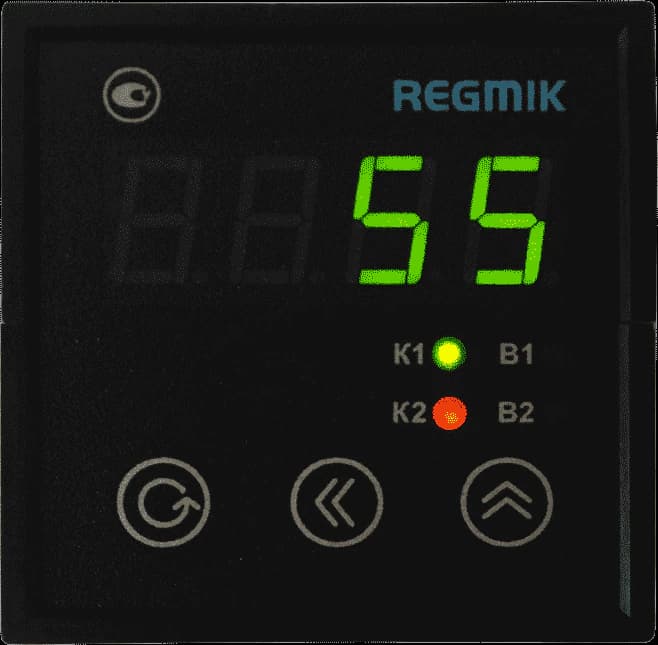 Two-Channel PID Controller with Analog Outputs RP2
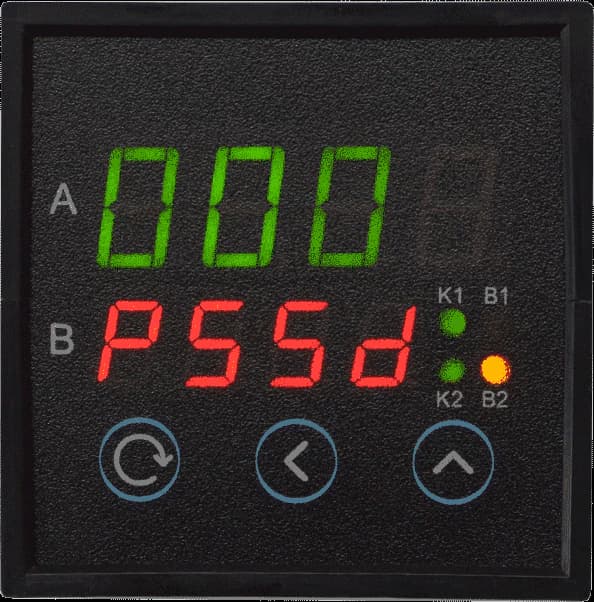 PID Single-Channel Controller RP1
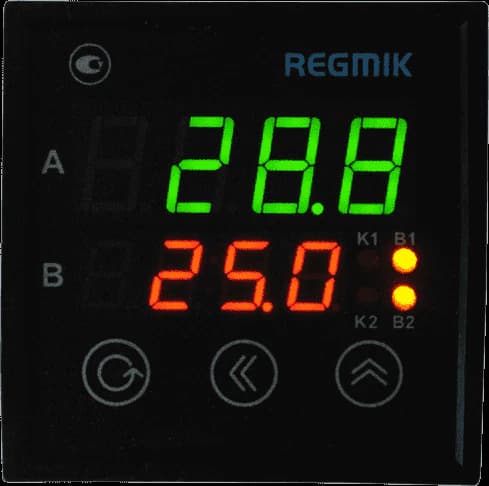 Humidity and Temperature Regulator RD2-DVTts
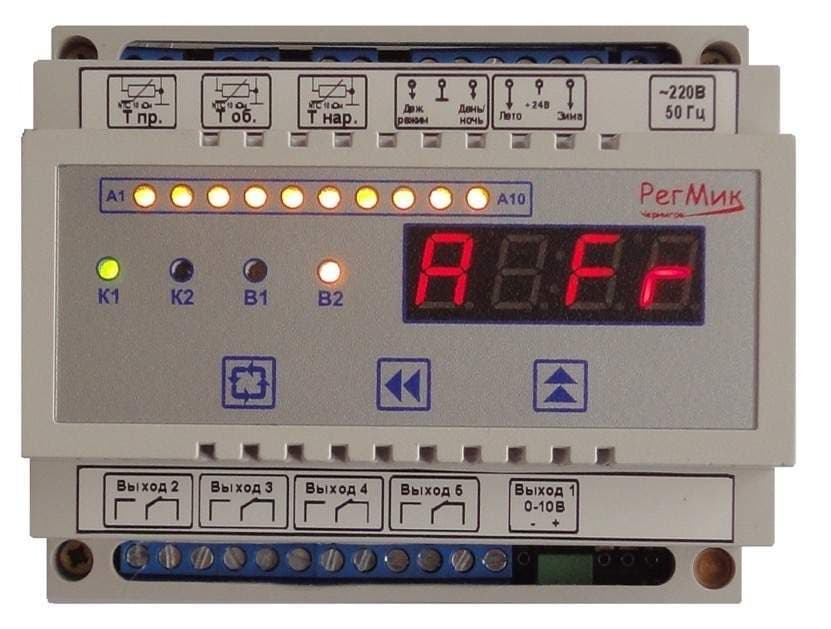 Supply Ventilation Regulator with Water Heater RP2-V
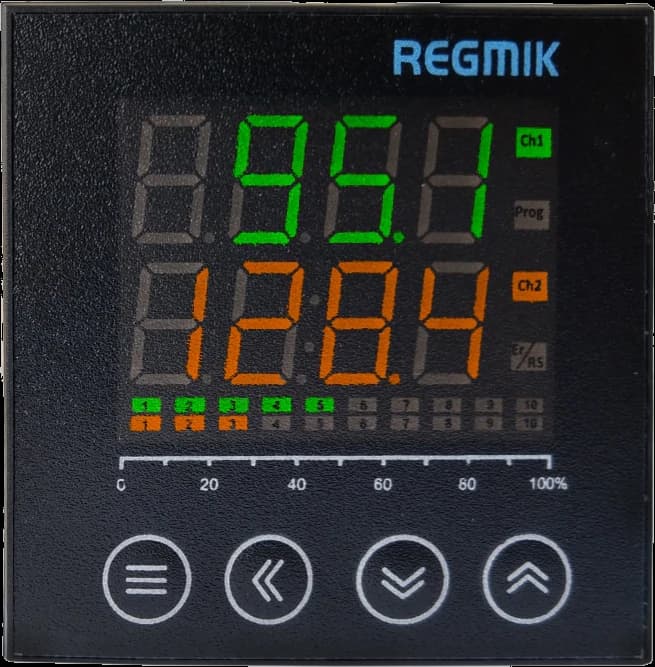 Temperature Controller with Timer RP2-U
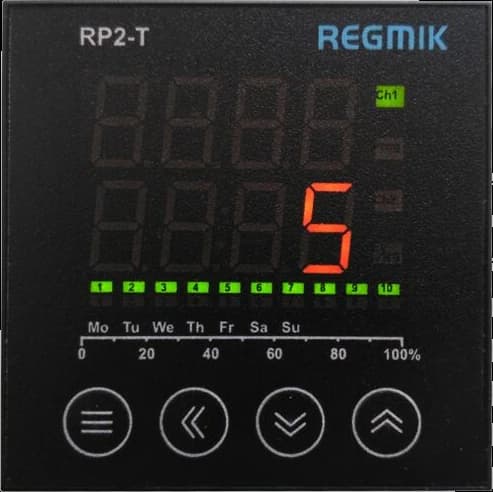 Universal Two-Channel Counter-Timer RP2-T
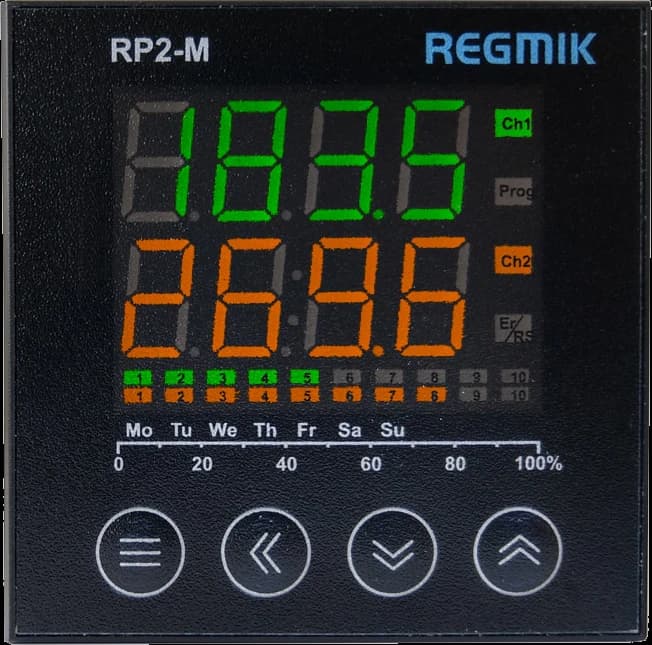 Universal two-channel device RP2-M
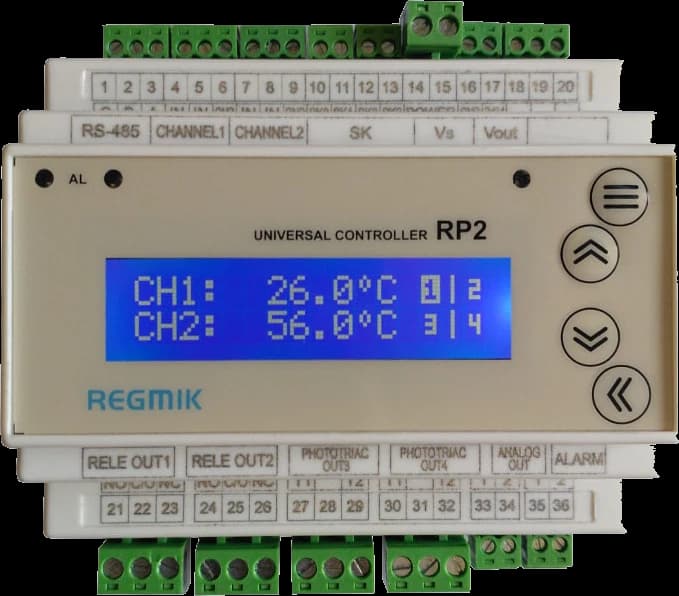 Universal RP2-M Controller on DIN Rail
Analog Control Regulators
Analog control regulators are designed for automatic regulation of technological processes and control of actuators that support an analog input signal. These devices generate control signals of 0–5 mA, 0–20 mA, 4–20 mA, or 0–10 V for smooth equipment control depending on the measured parameter and the preset operating mode.
Unlike two-position control, where the actuator operates only in "on" or "off" modes, analog control allows smooth adjustment of actuator position, heater power, or process speed, providing more precise and stable regulation.
What Analog Control Regulators are Used For
Regulators of this type are used to maintain temperature, humidity, pressure, level, flow, and other technological parameters in automation systems.
Main tasks:
- smooth control of actuators;
- temperature regulation of technological processes;
- control of valve and damper actuators;
- control of power regulators;
- maintaining stable process parameters;
- operation as part of PID control;
- automation of ventilation and heat engineering systems;
- transmission of control signal to actuators.
Where They Are Used
Analog output regulators are used in systems where proportional or PID control is required.
Main application areas:
- heating and heat supply systems;
- supply and exhaust ventilation;
- heat stations;
- drying chambers;
- industrial furnaces;
- heat exchangers;
- pump stations;
- food industry;
- chemical production;
- technological lines;
- dosing systems;
- automated manufacturing processes.
These regulators are especially effective in systems using electric actuators for dampers, three-way valves, power regulators, and other analog-controlled equipment.
Supported Input Signals
Regulators can operate with various types of sensors and converters.
Supported depending on the model:
- Pt100 resistance thermometers;
- Pt1000 resistance thermometers;
- thermocouples;
- humidity sensors;
- pressure sensors;
- level sensors;
- 0–5 mA signals;
- 0–20 mA signals;
- 4–20 mA signals;
- 0–10 V signals;
- universal analog inputs.
Analog Outputs
A key feature of these regulators is the presence of an analog control output signal.
Most common types of outputs:
- 0–5 mA;
- 0–20 mA;
- 4–20 mA;
- 0–10 V.
These signals are used for direct control of actuators or for transmitting commands to other automation equipment.
PID Control
Most analog control regulators use a PID algorithm that minimizes regulation error and enables smooth maintenance of the set parameter. Digital PID algorithms are used for analog outputs with adjustable process parameters.
PID regulation allows:
- reducing parameter fluctuations;
- shortening the time to reach the set mode;
- increasing temperature maintenance accuracy;
- ensuring technological process stability;
- reducing equipment energy consumption.
How to Choose an Analog Control Regulator
When choosing, consider:
- the type of controlled parameter;
- sensor type;
- required type of analog output;
- number of control channels;
- type of actuator;
- measurement range;
- regulation accuracy;
- need for PID control;
- availability of RS485 Modbus interface;
- mounting method;
- operating conditions.
For valve and actuator control, regulators with 0–10 V or 4–20 mA outputs are typically used. For controlling heaters via power regulators, 4–20 mA analog signals are also often applied.
Advantages of Use
Analog control regulators enable more precise and stable control compared to discrete schemes.
Main advantages:
- smooth process regulation;
- high accuracy of parameter maintenance;
- compatibility with most actuators;
- PID control capability;
- reduction in equipment wear;
- stable technological process operation;
- energy consumption reduction;
- integration into automation systems.
Buy Analog Control Regulators
Our catalog features analog control regulators designed for use with damper actuators, power regulators, valves, heating equipment, and other actuators. Models with outputs of 0–5 mA, 0–20 mA, 4–20 mA, and 0–10 V are available for various industrial automation tasks.